العربية
 Francés
 Русский
 Español

Drainage Board With Geotextile Advantages
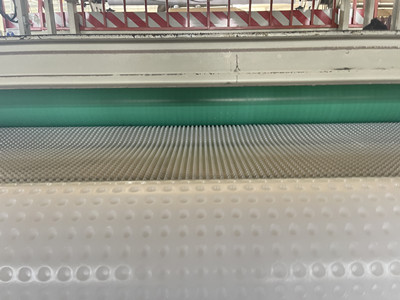
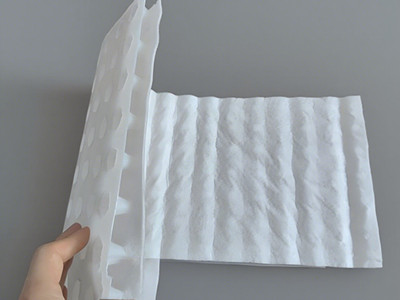
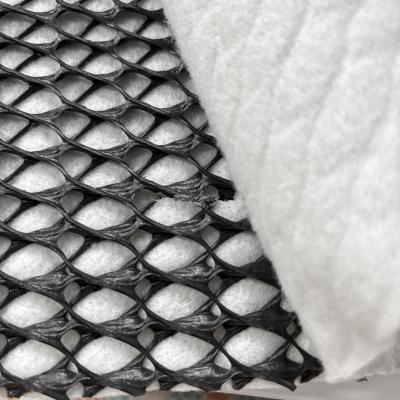
The drainage board with geotextile layer (usually formed by the combination of the drainage board base material and the geotextile) further enhances the core functions such as drainage, filtration, and protection through the synergy of the two materials' properties.
Its advantages mainly lie in the following aspects:
◆Efficient filtration to prevent drainage channels from getting clogged.The geotextile (mostly non-woven geotextile fabric) has a uniform pore structure, which can precisely intercept fine particles in the soil and only allow water to pass through and enter the drainage channel. This "filtration - drainage" combination can prevent fine particles from accumulating and blocking the drainage channels, maintaining drainage flow for a long time. This is something that a simple drainage board cannot achieve. For example, in rooftop gardens, fine soil particles in the planting soil will be blocked by the geotextile, allowing only rainwater or irrigation water to enter the drainage board and prevent the failure of the channels due to blockage, avoiding waterlogging and root rot.
◆Protecting the drainage board and extending its service life. The geotextile is covered on the surface of the drainage board, which can buffer external loads or direct impacts and friction from sharp objects on the drainage board,reducing the risk of board damage.
Especially in scenarios such as roadbeds and landfill sites,the geotextile can protect the raised structure of the drainage board from being crushed or scratched,ensuring its long-term stable drainage space.
◆Enhancing overall permeability and drainage efficiency. The geotextile itself has good permeability and can quickly converge large areas of dispersed water and evenly guide it into the drainage channel, avoiding local water accumulation;at the same time,the filtered clear water flows through the drainage channel with less resistance, accelerating the drainage speed.
◆Strengthening isolation and structural stability. After combining with the drainage board,the geotextile not only isolates different media (such as soil and sandstone, roadbed and base layer) but also enhances the stability of the overall structure through the tensile strength of the geotextile.
◆Simplifying construction and reducing costs. The composite structure combines the "laying of the drainage board" and "laying of the geotextile" into one process, reducing the labor and time costs of separately purchasing, transporting,and laying the two materials, and avoiding the risk of functional failure due to misalignment (such as the geotextile not fully covering the drainage board) during laying.
Especially in narrow spaces (such as the side walls of basements) or complex terrains,integrated laying is more convenient and efficient.
◆Adapting to more complex environments
In acidic or alkaline soils,high-permeability filtrate (such as landfill sites)etc,the combined geotextile (if it is an acid-alkali resistant model) and HDPE drainage boards can jointly resist chemical corrosion,and the filtering function of the geotextile can reduce the erosion of corrosive particles on the drainage board,broadening the application range of the materials.
In conclusion,the drainage board with geotextile fabric through the "filtration,protection,drainage,isolation" functional combination solves the pain points of simple drainage boards being prone to clogging and damage,and can more reliably achieve long-term stable drainage effects in engineering,making it the preferred solution for roadbeds, underground engineering,ecological restoration,etc.