العربية
 Francés
 Русский
 Español

Classification of Concrete Polypropylene Fibers
The core function of polypropylene fibers used in concrete is to control early micro-cracks with micro-fibers and enhance toughness and impact resistance with macro-fibers.
Classification by Morphology and Production Process:
1. Polypropylene monofilament fiber
Process: Melt spinning → Stretching and shaping → Cutting
Characteristics: Good dispersion, strong adhesion, convenient construction
Applications: Road surface, floor, roof, mortar, prefabricated components (controlled micro-cracks)
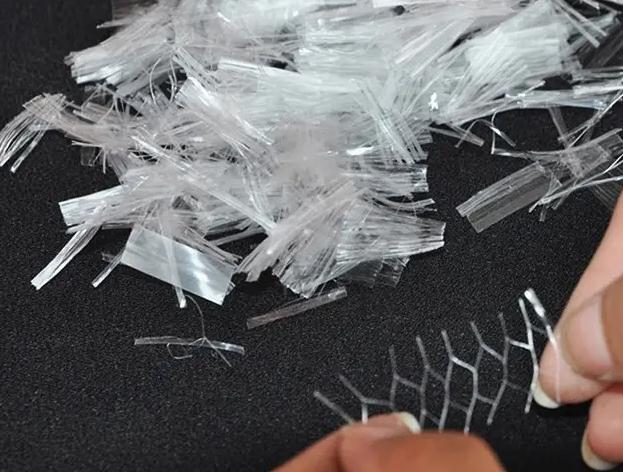
2. Polypropylene mesh fiber (bundle-shaped net fiber)
Process: Film → Stretching → Needle roller piercing into a mesh → Cutting
Characteristics: Three-dimensional mesh, large surface area, good cohesion, better crack resistance
Applications: Waterproof concrete, tunnel lining, airport runway, heavy-load road surface
3. Polypropylene fibrillated fiber (film fracture fiber)
Process: Film → Stretching → Fracture into fiber bundles
Characteristics: Multiple branches, large specific surface area, strong adhesion to the matrix
Applications: Controlling shrinkage cracks, enhancing the cohesion of freshly mixed concrete
4. Polypropylene twisted/Bundle fiber
Process: Multiple fibers twisted / Bundle formation
Characteristics: High strength, strong adhesion, significant crack resistance and toughness enhancement effect
Applications: Bridges, civil engineering, high-strength concrete, impact-resistant structures
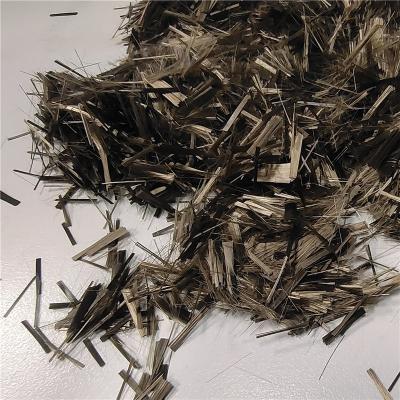
5. Polypropylene plastic steel fiber (coarse fiber)
Process: Coarse single fiber / Irregular cross-section (wavy, indentation, end hook)
Characteristics: High modulus, high toughness, strong resistance to bending / impact, alternative to steel fibers
Applications: Industrial flooring, bridge pavement, tunnels, military engineering, anti-explosion structures